
Gavin Williamson has set teachers up to take the blame for his mistakes
27th February 2021
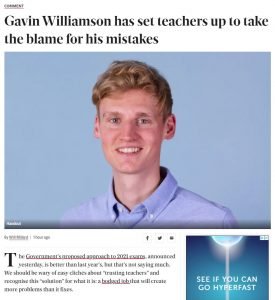
CfEY’s Head of Engagement Will Millard appeared in the Evening Standard this week, commenting on the latest news that school exams in 2021 will be graded by teachers.
In the comment piece, Will argued that: “We should be wary of easy clichés about “trusting teachers” and recognise this “solution” for what it is: a bodged job that will create more problems than it fixes.”
He raised concerns that while last summer Ofqual’s algorithm caused problems because of its lack of transparency, this year’s approach of relying on teacher assessment isn’t fully transparent either. Like the rest of us, teachers have their own preferences and biases, and these affect their judgments. Alongside this, trust in public exams has been badly shaken over the last year, and rebuilding this trust will require a transparency that teacher assessment won’t provide.
[bctt tweet=”Historically, the exams and gradings systems have generally possessed benign opacity. Exams have therefore had something in common with sausage meat – we were generally happy not knowing the detail so long as the end product was okay.” username=”TheCfEY”]
Importantly, Will also highlighted the risks for disadvantaged young people. Teacher assessment means that pupils from poorer families face a double whammy. They are more likely to attend low-performing schools, and evidence suggests teacher assessment discriminates against poorer pupils.
[bctt tweet=”The exams plan therefore places teachers in a lose-lose bind. They will be criticised for grading too leniently, too harshly or, more likely, both. ” username=”TheCfEY”]
This year’s appeals process, Will said, will pit families against schools, while politicians watch from the side-lines. He encouraged parents to be easy on themselves in guiding their children through this environment, adding that speaking openly about the future, to help young people distinguish between aspirations and expectations, can help.
[bctt tweet=”Parents can help their children break the journey into smaller, achievable steps (for example, gaining a pass in maths, and therefore completing this homework) and showing how these steps relate to longer term goals.” username=”TheCfEY”]
You can read the article in full here.